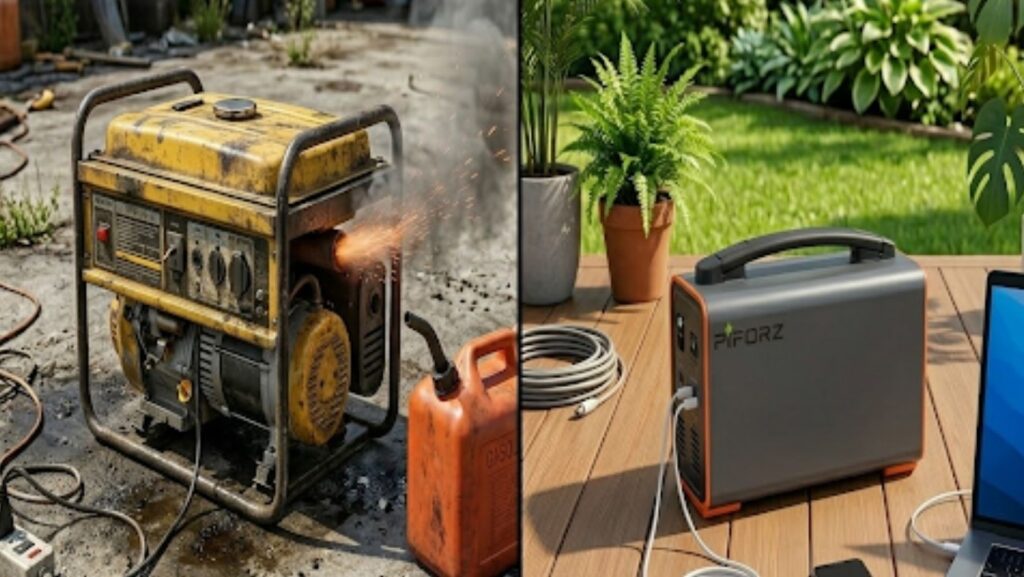
Blackouts Aren’t Just a “Small Nuisance” Anymore
Imagine a typical evening at home. Suddenly, the power snaps off. The Wi-Fi dies, the fridge stops humming, and your laptop is sitting at 20%. You’re fumbling for candles in the dark when you hear a loud roar from next door—the neighbor just cranked up their gas generator.
It’s a scene many of us know too well. But why does losing power feel so much worse in the 21st century?
The answer is simple: Electricity is now woven into every second of our lives.
Work & Connection: We rely on computers and the internet; one dead phone can ruin an entire meeting.
Health: Medical devices like ventilators and oxygen concentrators need a steady flow of power to save lives.
Safety: Smart home security systems go dark the moment the grid fails.
Daily Needs: Even ordering a meal or checking the news requires a charged device.
Extreme weather is making blackouts more common, but our total reliance on tech makes them feel more urgent. Power isn’t just a convenience anymore—it’s a necessity for work, safety, and basic living.
For decades, we thought any backup power was “good enough” as long as it worked. But are those old, noisy gas engines really the right fit for a modern home? Today, portable power hubs are setting a new standard: quiet, clean, smart, and built for real life.
The Hidden Costs: Why Old Generators Don’t Cut It Anymore
A small gas generator might look like a steal at $200 or $300. But the real price tag goes way beyond the sticker.

1. The Noise Factor
Gas generators usually roar at about 90 decibels—roughly the same as a semi-truck driving past your window. For context, a normal conversation is around 50-60 dB. Anything over 70 dB can ruin your sleep. That constant drone doesn’t just annoy you; it keeps the whole neighborhood awake and can even impact your heart health over time.
2. Breathing in Fumes
These engines pump out carbon monoxide and nasty particles that are terrible for your lungs, especially for kids or seniors. Because of the deadly risk of carbon monoxide poisoning, you cannot use them indoors. You have to keep them at least 20 feet away from your house. Imagine having to go out into a freezing rainstorm just to check the oil or add more gas.
3. The Maintenance Headache
A gas generator is like a car that needs constant attention:
Frequent Oil Changes: You often have to swap the oil after just the first 5-20 hours of use.
Fuel Issues: Gasoline goes bad in 3-6 months unless you add stabilizers.
Recurring Costs: You’re constantly paying for gas, and prices are always changing.
As experts have noted, these machines are high-maintenance and expensive to fix if they break. When you add up the noise, the health risks, and the constant tinkering, they aren’t actually “cheap” at all.
Portable Power: A Better Way to Back Up
Unlike gas engines, a portable power station is essentially a high-capacity lithium battery that stores energy instead of “creating” it. This small shift changes everything.
Total Silence: These units run with zero noise. There are no moving pistons or explosions—just solid-state tech. The only sound you might hear is a tiny cooling fan, and even then, it’s quieter than the room around you. You can keep it right next to your bed or inside a tent without a sound.
Zero Emissions: No exhaust, no fumes, and completely safe to use inside. You don’t have to worry about carbon monoxide or running long extension cords through an open window.
No Maintenance: There’s no engine to fix, no oil to change, and no spark plugs to clean. It’s like a giant version of your phone’s power bank—just charge it and forget it until you need it. Even if it sits in a closet for six months, it’ll still be ready to go.
Solar Friendly: You can pair these battery backups with solar panels to get “forever power” for free. It turns your home into its own mini-power plant using clean energy from the sun.
The Real Math: 3-5 Year Costs
When you look at the big picture, the “cheap” gas generator starts to look a lot more expensive.
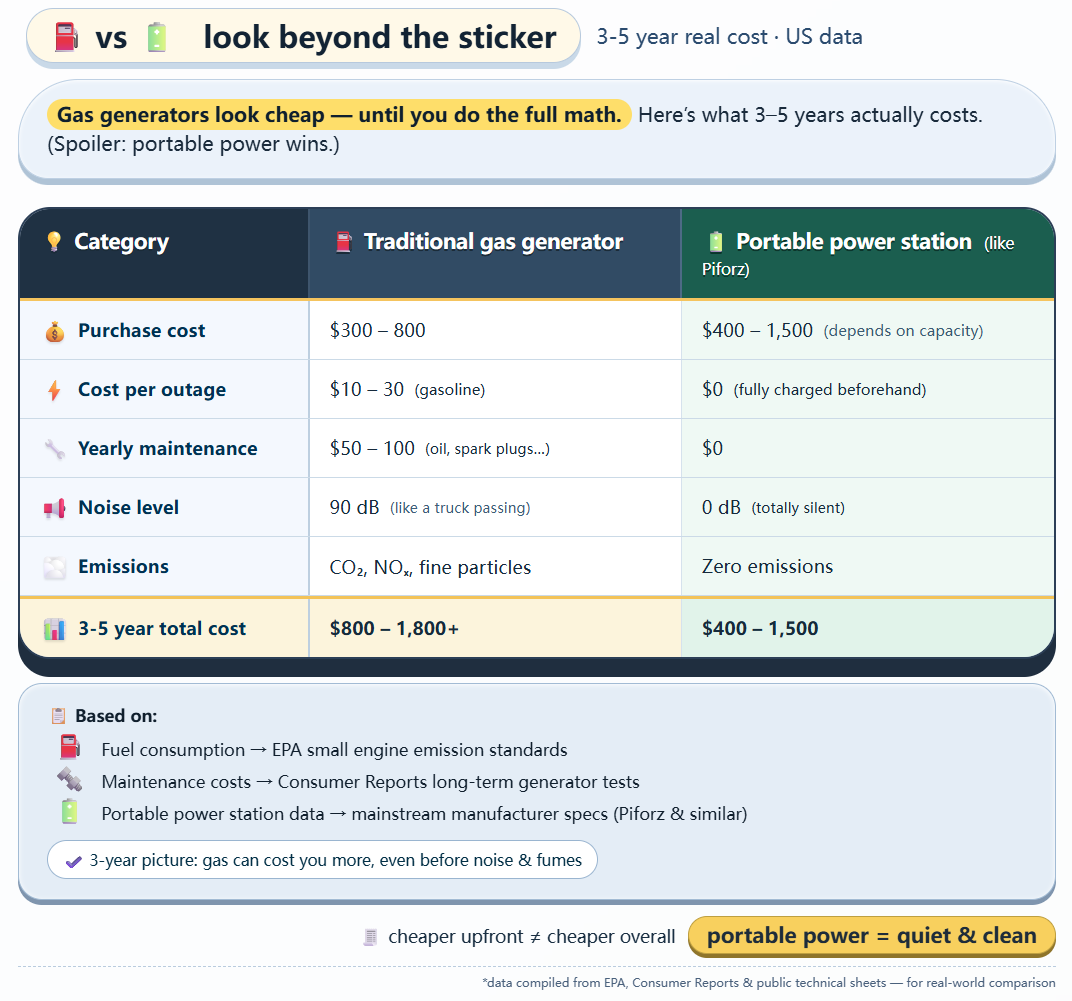
Over 3 to 5 years, a portable solar generator like those from Piforz ends up costing about the same as a gas one, but it gives you a much better experience: no noise, no fumes, and no chores.
From “Emergency Tool” to “Lifestyle Essential”
These devices aren’t just for disasters anymore; they’ve become part of how we manage energy every day.
At Home: Keep your fridge running, the Wi-Fi on, and your home office powered up during a storm.
Outdoors: Perfect for camping or RV trips where you want to enjoy nature without a loud engine humming in the background.
Remote Work: Great for photographers, filmmakers, or anyone who needs to charge pro gear in the middle of nowhere.
The Next Decade of Power
Gas generators solved the problem of “how do we get power?” but they brought too much baggage—noise, pollution, and hassle.
As battery prices continue to drop—falling from nearly $700/kWh in 2013 to about $132/kWh recently—clean, silent power is becoming the obvious choice for everyone.
The next time the lights go out, you don’t have to choose between sitting in the dark or waking up the neighborhood. You can choose a life that is quiet, clean, and always connected.
As the saying goes: “Quiet energy is better energy”.