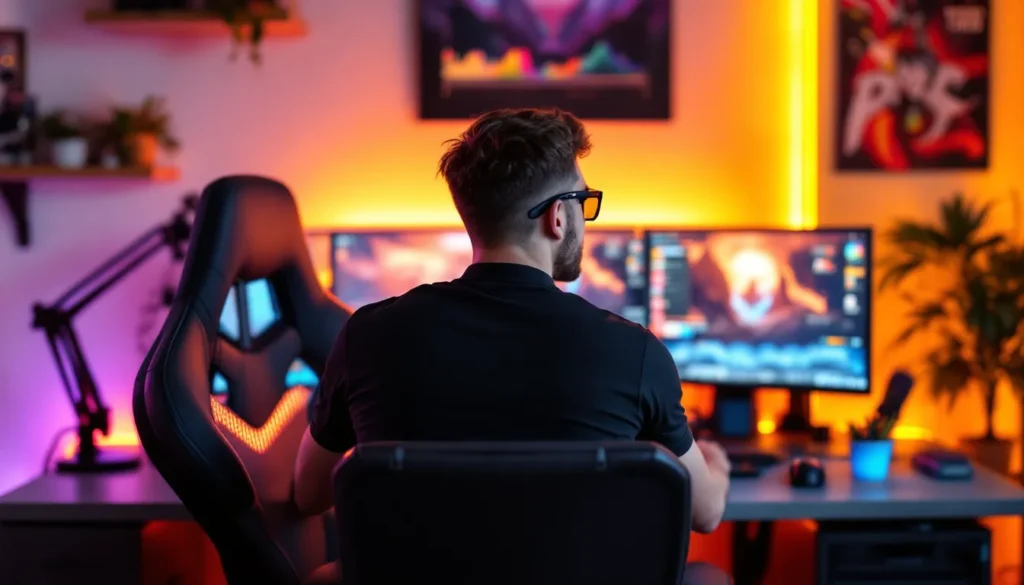
After six hours deep into a ranked grind, that familiar ache sets in, dry eyes, a dull throb behind your temples, maybe a slight blur when you finally look away from the screen. It’s not just fatigue. It’s the price of staring at high-refresh displays pumping blue light directly into your retinas for hours on end.
Blue light gaming glasses have gone from niche accessory to staple gear for serious gamers. They promise to cut eye strain, sharpen focus, and even help you sleep better after late-night sessions. But with dozens of brands flooding the market and claims ranging from reasonable to outright dubious, it’s tough to separate legitimate eye protection from overpriced placebo.
This guide breaks down everything gamers need to know about blue light glasses in 2026, what they actually do, whether the science backs them up, how to pick the right pair, and when they’re worth wearing. No fluff, no marketing hype. Just the facts.
Key Takeaways
- Blue light gaming glasses filter 30–80% of harmful blue light depending on your needs—lighter filtering (30–50%) preserves color accuracy for competitive play, while heavier filtering (60–80%) maximizes sleep benefits for evening sessions.
- Clinical research confirms blue light gaming glasses reduce eye strain and improve visual comfort during extended screen time, but they work best as part of a layered strategy including monitor settings, breaks, and proper ergonomics.
- Gaming-specific blue light glasses feature thinner, flexible frames compatible with headsets, making them fundamentally different from regular office blue light glasses designed for occasional use.
- The 20-20-20 rule (looking 20 feet away for 20 seconds every 20 minutes) combined with blue light gaming glasses provides the best eye protection for marathon gaming sessions lasting 3+ hours.
- Blue light gaming glasses won’t prevent long-term eye conditions like age-related macular degeneration, but they reduce acute strain and can increase melatonin levels by up to 58% when worn before bed, helping you sleep better after late-night play.
- Price doesn’t determine filtering effectiveness—mid-range gaming glasses ($30–60) often match premium models ($100+) in blue light reduction, so check published specs rather than assuming expensive means better.
What Are Blue Light Gaming Glasses?
Blue light gaming glasses are specialized eyewear designed to filter out or block a portion of the high-energy visible (HEV) blue light emitted by screens. Unlike standard prescription glasses or sunglasses, they target the 380–500 nanometer wavelength range where digital displays, monitors, TVs, phones, concentrate their blue light output.
Most gaming glasses use either a coating applied to clear lenses or tinted lenses (usually yellow or amber) to achieve this filtering effect. They’re built to be worn indoors during extended screen time, which makes them fundamentally different from outdoor eyewear.
How Blue Light Gaming Glasses Work
The filtering mechanism depends on the lens technology. Coated lenses use multiple layers of anti-reflective and blue light-blocking treatments that selectively absorb or reflect blue wavelengths while letting other colors pass through. These tend to look nearly clear with a faint yellow or purple tint when viewed at an angle.
Tinted lenses take a more aggressive approach, using amber or yellow pigmentation to physically block blue light. The trade-off? They alter color perception, whites look warmer, blues appear muted, which can affect competitive gaming where spotting enemy outlines or UI elements matters.
The filtering percentage varies widely by brand and model, ranging from 20% blue light reduction on the low end to 90%+ on heavily tinted options. More isn’t always better: excessive filtering can make screens look dingy and throw off color accuracy in games with carefully tuned art direction.
Blue Light Gaming Glasses vs Regular Blue Light Glasses
Gaming-specific blue light glasses differ from standard computer glasses in three key ways: frame design, filtering balance, and durability.
Regular blue light glasses often prioritize fashion or office aesthetics, think thin metal frames or rounded styles. Gaming glasses use wider, sturdier frames built to sit comfortably under headset bands without creating pressure points. The temples are usually thinner and more flexible to avoid getting pinched between your head and the ear cups.
Filtering philosophy also diverges. Office-oriented glasses tend toward minimal tinting (preserving neutral color for spreadsheets and documents), while gaming glasses offer options across the spectrum. Competitive FPS players might want light filtering to maintain color accuracy for spotting enemies, while MMO or strategy gamers grinding late into the night might prefer heavier tinting for maximum eye strain reduction.
Finally, gaming glasses are built for longer wear periods. Padding on nose bridges, lighter frame materials, and anti-slip coatings are common features you won’t always find on basic blue light glasses designed for occasional Zoom calls.
Why Gamers Need Blue Light Protection
Gamers face a unique trifecta of eye health challenges: marathon session durations, high screen brightness (especially on modern HDR displays), and proximity to large monitors. It’s not uncommon for dedicated players to log 4–8 hour sessions regularly, sometimes more during new releases or ranked grinds.
Digital Eye Strain and Extended Gaming Sessions
Digital eye strain, also called computer vision syndrome, is the collection of symptoms that show up after prolonged screen exposure. For gamers, this means dry eyes, blurred vision, headaches, and that burning sensation that creeps in during hour three of a session.
The mechanics are straightforward: staring at screens reduces blink rate by roughly 60%, which dries out the eye’s surface. Add blue light’s tendency to scatter more than other wavelengths (creating visual noise your eyes work harder to process), and you’ve got a recipe for fatigue.
Competitive gaming amplifies this. High-refresh 240Hz or 360Hz monitors demand constant visual focus to track fast movement, and cranking brightness to spot enemies in dark corners pushes even more blue light into your eyes. The result? Strain sets in faster and hits harder than casual browsing or watching streams.
Sleep Quality and Gaming Performance
Blue light exposure after sunset suppresses melatonin production, the hormone that regulates your sleep-wake cycle. For gamers who routinely play from 8 PM to 2 AM, this isn’t trivial. Poor sleep tanks reaction time, decision-making, and mood, all of which directly impact performance.
Research from the National Sleep Foundation indicates that blue light exposure in the two hours before bed can delay sleep onset by up to 90 minutes. That late-night Valorant session might be costing you rank the next day when you’re sluggish and missing shots you’d normally hit.
Filtering blue light in the evening doesn’t magically fix bad sleep hygiene, but it does reduce one variable working against you. Many esports players have adopted blue light glasses or monitor filters as part of their pre-competition routine for exactly this reason.
Long-Term Eye Health Concerns for Gamers
The long-term effects of chronic blue light exposure are still being studied, but early research points to potential risks. Blue light penetrates deeper into the eye than UV light, reaching the retina where it may contribute to phototoxicity, damage to light-sensitive cells over time.
Some ophthalmologists theorize that cumulative exposure could accelerate age-related macular degeneration (AMD), though this remains a point of debate in the medical community. What’s less controversial: extended screen time without breaks absolutely contributes to myopia (nearsightedness) progression, especially in younger gamers whose eyes are still developing.
Blue light glasses won’t prevent myopia or cure AMD, but they’re part of a broader eye health strategy. Think of them like wrist rests or ergonomic chairs, they reduce strain from an activity you’re doing anyway.
Proven Benefits of Blue Light Gaming Glasses
The benefits of blue light gaming glasses aren’t universal or magical, but for gamers logging serious hours, they offer measurable improvements in specific areas. Here’s what actually holds up.
Reduced Eye Strain and Fatigue
This is the most consistent benefit reported by users and supported by research. A 2021 study published in the Journal of Adolescent Health found that participants wearing blue light filtering glasses experienced significantly less eye strain after two hours of screen time compared to a control group.
For gamers, the practical upside is being able to maintain focus deeper into sessions. Instead of that fourth hour feeling like a slog where you’re fighting eye fatigue as much as opponents, vision stays clearer longer. The effect is most noticeable during text-heavy games (CRPGs, strategy titles) or when tracking small UI elements.
Reduced strain also means fewer headaches. Many gamers report that the dull, persistent headache that used to show up mid-session either disappears or becomes much milder when wearing blue light glasses consistently.
Improved Focus and Reaction Time
This benefit is more conditional and harder to measure objectively, but the logic is sound: if your eyes aren’t working overtime to filter visual noise and combat dryness, you’ve got more cognitive bandwidth for the game itself.
Anecdotal reports from competitive players suggest that blue light glasses help maintain mental sharpness during the back half of tournaments or long practice blocks. Whether that translates to measurable improvements in reaction time or accuracy is tough to isolate (there are too many variables in gaming performance), but the subjective experience of feeling less mentally drained is real.
One mechanism that might contribute: by reducing glare and improving contrast (especially with lightly tinted lenses), blue light glasses can make it easier to track movement and spot details. That’s not a night-and-day difference, but in competitive settings where milliseconds matter, every edge counts.
Better Sleep After Late-Night Gaming
If you game in the evening and struggle to fall asleep afterward, blue light glasses can help, provided you’re also addressing other factors like caffeine intake and room temperature.
A 2019 study from the University of Houston found that participants wearing blue light blocking glasses for three hours before bed experienced a 58% increase in nighttime melatonin levels. That’s significant. For gamers, this means wearing glasses during your 9 PM–midnight session could make it easier to wind down and actually sleep by 1 AM instead of lying awake until 3.
The effect is most pronounced with heavier filtering (50%+ blue light reduction), which is why many brands offer separate “day” and “night” models. The trade-off is color distortion, so this works better for single-player or co-op games where competitive color accuracy isn’t critical.
Key Features to Look for in Gaming Glasses
Not all blue light gaming glasses are built the same. Here’s what separates functional gear from overpriced plastic.
Blue Light Filtering Percentage
This is the most important spec, and it’s frustratingly inconsistent across brands. Some manufacturers publish clear data (e.g., “blocks 65% of blue light in the 400–450nm range”), while others use vague terms like “advanced filtering” or “premium protection.”
For daytime gaming or competitive play, look for 30–50% filtering. This reduces strain without drastically altering color balance. For evening sessions focused on sleep quality, 60–80% filtering is more effective but comes with noticeable amber tinting.
Be skeptical of claims above 90% unless the lenses are heavily tinted. Physics matters, if the lens looks nearly clear, it’s not blocking the majority of blue light. Gaming peripheral reviews from sources like PCMag often include lab-tested filtering percentages, which can help cut through marketing claims.
Lens Coating and Color Accuracy
Beyond blue light filtering, anti-reflective (AR) coating is essential. It reduces glare from overhead lights or windows, which is just as important for reducing eye strain as filtering blue light itself.
Color accuracy matters more for some gamers than others. If you play competitive shooters or games with carefully tuned color grading (think Cyberpunk 2077 or Red Dead Redemption 2), heavy amber tinting will annoy you. Look for lenses described as “neutral tint” or “minimal color shift.”
Some premium models use color compensation technology, which attempts to correct the color distortion introduced by tinting. Results vary, it’s worth reading user reviews to see how well this works in practice for the specific games you play.
Frame Comfort and Compatibility with Headsets
This is where gaming glasses diverge most from regular eyewear. Standard glasses with thick temples or chunky frames get pinched between your head and headset ear cups, creating painful pressure points during long sessions.
Look for:
- Thin, flexible temples that slide easily under headset bands
- Lightweight materials (TR90 plastic or titanium) to avoid adding pressure to your nose bridge
- Adjustable nose pads for fine-tuning fit
- Wraparound or semi-wraparound frame styles that provide peripheral blue light protection without looking like safety goggles
If you wear a headset with strong clamping force (like the SteelSeries Arctis series or HyperX Cloud models), prioritize frames explicitly designed for gaming. Standard office blue light glasses often fail the headset compatibility test.
Do Blue Light Gaming Glasses Actually Work? The Science Explained
The short answer: yes, but with caveats. Blue light glasses do what they claim, filter blue light, but whether that filtering produces the benefits you care about depends on your usage patterns and expectations.
Clinical Studies on Blue Light and Eye Health
The scientific consensus on blue light glasses is mixed, which makes sense given the range of products and use cases. A 2017 review by the American Academy of Ophthalmology concluded that while blue light exposure can disrupt sleep, there’s insufficient evidence that it causes permanent eye damage in typical screen use scenarios.
But, studies focused specifically on symptom relief show more promising results. Research published in Ophthalmic and Physiological Optics (2020) found that blue light filtering lenses reduced self-reported eye strain and improved visual comfort in office workers, a population with screen exposure comparable to gamers.
The key distinction: blue light glasses help with acute symptoms (strain, sleep disruption) but aren’t proven to prevent long-term conditions like AMD or cataracts. For gamers, the practical takeaway is that glasses are a comfort and performance tool, not a medical device.
It’s also worth noting that the intensity and duration of exposure matter. Gamers on high-brightness 4K HDR monitors at close range face different blue light loads than casual phone users, which is why reviews from tech-focused outlets like TechRadar often emphasize use-case specificity when evaluating gaming glasses.
What Professional Gamers Say About Blue Light Glasses
Anecdotal evidence from the esports community is largely positive but not unanimous. Many pro players wear blue light glasses during practice and competition, citing reduced eye fatigue as the primary benefit. Notable examples include members of Team Liquid, FaZe Clan, and several Overwatch League rosters who’ve partnered with eyewear brands.
That said, some pros remain skeptical, particularly in games where color accuracy is critical. CS:GO and Valorant players have reported that amber-tinted lenses can make it harder to distinguish certain player skins or map elements, potentially offsetting the comfort benefits.
The consensus seems to be: blue light glasses are helpful for training blocks and marathon sessions but may not be ideal for high-stakes competition unless you’ve trained extensively with them and adjusted to any color shifts. Individual variation matters, what works for one player might not work for another.
When and How to Use Blue Light Gaming Glasses
Knowing when to wear blue light glasses is just as important as picking the right pair. They’re not an all-day-every-day necessity, and using them strategically maximizes benefits without unnecessary hassle.
Optimal Usage Times for Maximum Benefit
The sweet spot for wearing blue light gaming glasses is during extended sessions (3+ hours) and evening gaming (after sunset).
For daytime play, the case for blue light glasses is weaker if you’re only gaming for an hour or two. Your eyes can handle moderate blue light exposure without intervention, and you’ll get more mileage from proper monitor positioning and regular breaks.
But once you cross the three-hour mark, cumulative strain starts building. This is when filtering makes a measurable difference. Pop them on at the start of a long session rather than waiting until your eyes already hurt, prevention beats mitigation.
Evening usage is where sleep benefits come into play. If you typically game from 8 PM onward, wear blue light glasses the entire time. This gives your body a fighting chance to maintain normal melatonin production and avoid the “wired and tired” feeling that keeps you up past your intended bedtime.
Competitive players should experiment during practice to find their tolerance for any color shifts. Don’t debut new glasses on tournament day.
Pairing with Other Eye Protection Strategies
Blue light glasses work best as part of a layered approach to eye health. They’re not a solo solution.
First, nail your monitor settings. Reduce brightness to a comfortable level (aim for roughly matching ambient room lighting), enable any built-in low blue light modes, and consider calibrating color temperature to warmer settings in the evening. Many gaming monitors now include hardware blue light filters that complement glasses without redundancy.
Second, follow the 20-20-20 rule (covered in more detail later). Glasses reduce strain, but they don’t eliminate the need for breaks. Your eyes still need to refocus on distant objects regularly to prevent accommodation lock.
Third, manage your environment. Position your monitor at arm’s length with the top of the screen at or slightly below eye level. Use ambient lighting to reduce contrast between your screen and surroundings, a bright monitor in a dark room amplifies strain regardless of blue light filtering.
Finally, stay hydrated and consider artificial tears if you’re prone to dry eyes. Blue light glasses don’t directly affect tear production, so dry eye symptoms may persist without additional intervention.
Common Myths and Misconceptions About Blue Light Gaming Glasses
Blue light glasses have accumulated plenty of myths, some perpetuated by overzealous marketing and others by misunderstanding the science. Let’s clear up the biggest ones.
Myth: Blue light glasses eliminate all eye strain.
False. They reduce one contributing factor, blue light exposure, but eye strain has multiple causes: poor ergonomics, reduced blink rate, screen brightness, contrast issues, and uncorrected vision problems. Glasses help, but they’re not a cure-all. You can still wreck your eyes with poor habits while wearing the best blue light glasses on the market.
Myth: All blue light is bad and should be blocked completely.
Not even close. Blue light regulates circadian rhythm, boosts alertness, and supports mood during daytime hours. Blocking 100% of blue light all day would mess with your sleep-wake cycle and potentially contribute to seasonal affective symptoms. The goal is selective reduction, less blue light in the evening, moderate filtering during extended screen time.
Myth: More expensive glasses filter more blue light.
Price correlates loosely with build quality, brand reputation, and aesthetics, but not directly with filtering effectiveness. Plenty of mid-range gaming glasses (~$30–60) offer comparable blue light reduction to premium models ($100+). The difference often comes down to frame materials, lens coatings, and warranty support rather than filtering percentage.
Always check published specs or independent testing rather than assuming price equals performance.
Myth: You need prescription blue light glasses if you wear contacts.
Not necessarily. Blue light filtering is independent of vision correction. If you wear contacts and have 20/20 vision with them, standard non-prescription blue light gaming glasses work fine. Only get prescription blue light lenses if you need vision correction and prefer glasses over contacts during gaming.
Myth: Blue light glasses replace the need for screen breaks.
Absolutely not. Glasses reduce blue light exposure but don’t address accommodation fatigue (the strain from focusing at a fixed distance for hours) or the postural issues from sitting static. You still need to take breaks, stretch, and look away from the screen regularly. Glasses buy you more comfort during screen time: they don’t make breaks optional.
Alternatives and Complementary Solutions
Blue light glasses aren’t the only tool in the eye protection toolkit. Combining them with software, hardware, and behavioral strategies delivers better results than any single approach.
Monitor Settings and Software Filters
Modern gaming monitors include hardware-based low blue light modes that shift color temperature toward warmer tones. These work by reducing blue channel output at the panel level. Unlike software filters, they don’t introduce input lag or affect GPU performance.
The trade-off? Color accuracy tanks. Blues look muddy, whites skew yellow, and vibrant game art loses pop. This is fine for RTS or MOBA sessions where clarity matters more than visual fidelity, but it’ll bother you in single-player games with strong art direction.
Software solutions like f.lux or Windows Night Light adjust color temperature based on time of day. They’re free, customizable, and effective for sleep quality, but they alter on-screen colors even more aggressively than hardware filters. Competitive players usually disable these to maintain color accuracy.
For the best of both worlds, use light software filtering during the day and ramp it up in the evening, or combine moderate monitor settings with blue light glasses to balance color preservation and eye protection. Tech reviews from outlets like Tom’s Guide frequently test gaming monitors’ blue light reduction features, which can help identify models with better color balance.
The 20-20-20 Rule and Break Scheduling
The 20-20-20 rule is simple: every 20 minutes, look at something 20 feet away for at least 20 seconds. This forces your eyes to refocus, relaxing the ciliary muscles that lock into accommodation during extended near-focus work.
Does anyone actually do this? Rarely. The rhythm of gaming doesn’t naturally accommodate 20-minute intervals. A more realistic approach: set a timer for 60–90 minutes and take a proper 5-minute break. Stand up, walk around, look out a window, grab water. Let your eyes fully disengage from the screen.
Between breaks, practice conscious blinking. It sounds silly, but deliberately blinking every few seconds during low-intensity moments (loading screens, respawn timers, menu navigation) combats dry eye significantly.
For competitive players grinding ranked or practicing with a team, break timing needs to align with natural game boundaries, between matches, after scrims, during queue times. Don’t break mid-match, but don’t skip breaks entirely just because you’re on a win streak.
These behavioral strategies complement blue light glasses perfectly. Glasses reduce blue light strain: breaks address accommodation fatigue and postural stress. Together, they extend how long you can game comfortably.
Conclusion
Blue light gaming glasses won’t turn you into a pro overnight or magically cure years of screen time damage, but they’re a legitimate tool for managing the realities of long gaming sessions. They reduce eye strain, help preserve sleep quality after late-night play, and can extend how long you can maintain focus without discomfort.
The science backs the core claims, blue light filtering does what it’s designed to do, but the real-world benefits depend on choosing the right filtering strength for your use case, pairing glasses with good habits, and setting realistic expectations. They’re part of a broader eye health strategy, not a standalone fix.
For gamers logging serious hours, especially those grinding competitive ranks or streaming into the early morning, blue light glasses are worth the investment. Just skip the overpriced marketing hype, check filtering specs, and make sure the frames actually fit under your headset.