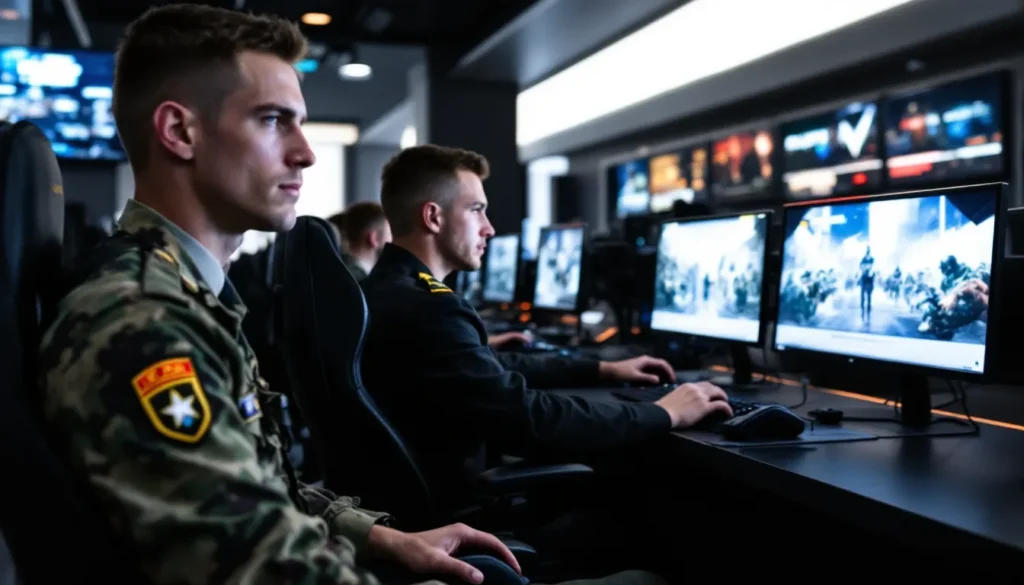
When the U.S. Army announced its esports initiative back in 2018, most gamers didn’t know what to make of it. A military branch fielding competitive gaming teams? Streaming on Twitch? It sounded like a fever dream mashup of two worlds that had no business colliding. Fast forward to 2026, and Army Esports has become one of the most recognizable, and polarizing, forces in competitive gaming. They’ve racked up tournament wins, built a massive following, and sparked debates that reach far beyond gaming circles. Whether you’re curious about joining, skeptical of their motives, or just wondering how a government-funded team stacks up against traditional orgs, this is everything you need to know about Army Esports and its place in the gaming landscape today.
Key Takeaways
- Army Esports operates as an official U.S. Army competitive gaming program staffed by active-duty soldiers, primarily designed as a recruitment and brand awareness tool targeting Gen Z audiences in gaming spaces.
- The program has expanded significantly by 2026, with 40+ competitive players across titles like Valorant, Call of Duty, and League of Legends, 500K Twitch followers, and tournament placements that prove competitive legitimacy alongside traditional esports organizations.
- Army Esports athletes must first enlist in the U.S. Army through standard requirements, then apply for the assignment while maintaining military duties and duties—earning standard military pay with no direct prize money, as winnings fund the program.
- The program remains highly controversial, with critics arguing it uses gaming platforms to target minors for recruitment, while the Army maintains strict age policies and emphasizes authentic representation over aggressive pitching.
- Military esports programs from multiple U.S. branches and allied nations have emerged following Army Esports’ template, creating a distinct military gaming circuit that has normalized government involvement in competitive gaming while influencing how amateur teams approach professionalization.
- Future expansion plans include 60+ active players, mobile gaming divisions, and larger branded tournaments with prize pools exceeding six figures, though the program’s trajectory depends on recruitment effectiveness and political budget support.
What Is Army Esports and Why Does It Exist?
Army Esports is the official competitive gaming and streaming program run by the United States Army. It’s not a side project or a third-party sponsorship, this is a legitimate military operation staffed by active-duty soldiers who happen to be damn good at video games.
The Mission Behind Military Gaming Programs
The Army didn’t launch an esports program because they suddenly became gaming fans. It’s a recruitment tool, plain and simple. Traditional advertising wasn’t cutting it with Gen Z, and the Army needed a way to connect with young people where they actually spend their time: online, in games, watching streams.
Army Esports aims to build brand awareness and create positive touchpoints with potential recruits. Soldiers on the team compete in tournaments, stream regularly, and engage with communities on Discord, Twitch, and Twitter. The idea is to show that the Army is made up of real people with relatable interests, not just a faceless institution.
They’ve been transparent about this from the start. The program falls under Army Marketing and Engagement Brigade (MEB), and every member is an enlisted soldier first, gamer second. Their job is to represent the Army in the gaming space, answer questions about military life, and yes, encourage qualified individuals to consider enlistment.
How Army Esports Differs from Traditional Esports Teams
Army Esports operates under constraints that organizations like Team Liquid or FaZe Clan never deal with. For starters, every player is a full-time soldier. They have military duties, PT requirements, and regulations to follow. They can’t just grind 14 hours a day or relocate to a gaming house in LA.
Their roster is also limited to active-duty personnel. They can’t sign free agents, buy out contracts, or recruit internationally. If someone on the team gets deployed or transferred to a new duty station, they’re off the roster. That kind of turnover would kill a traditional org.
Budget-wise, they’re funded by taxpayer dollars, which means everything they do is subject to scrutiny. They can’t accept outside sponsorships from energy drink companies or peripheral manufacturers. Their gear, travel, and operations all come from military appropriations.
Even though these limitations, they’ve managed to field competitive rosters and build a legitimate presence across multiple titles. It’s a weird hybrid model, but it works, at least on paper.
The History and Evolution of Army Esports
From Launch to Controversy: The Early Years
Army Esports officially launched in November 2018 with a small team competing in a handful of titles. The initial reception was… mixed. Gamers were curious but cautious. The Army set up a Twitch channel, started streaming regularly, and began participating in amateur tournaments.
By mid-2019, things got messy. The Army’s Twitch chat became a battlefield of its own, flooded with questions about war crimes, recruitment ethics, and U.S. foreign policy. Moderators started issuing bans, which only made things worse. Accusations of censorship and First Amendment violations started flying.
In July 2020, the Army got banned from TwitchCon after running a giveaway promotion that critics said violated platform rules and potentially misled participants about recruitment. Congress even got involved, with representatives questioning whether military esports violated regulations around recruiting minors.
The controversy peaked when Twitch temporarily banned the Army’s channel for DMCA strikes and moderation issues. It was a PR nightmare, but it also put Army Esports on the map. Love them or hate them, people were paying attention.
Major Milestones and Tournament Successes
Once the initial storm settled, Army Esports started racking up actual results. In 2021, their Call of Duty: Warzone squad placed top 8 at a major invitational. Their Rocket League team qualified for a national championship bracket. These weren’t charity invites, they earned their spots through open qualifiers.
By 2023, they’d expanded significantly. The team roster grew to over 40 active competitors across multiple titles, with additional streamers and content creators supporting the brand. They launched a dedicated YouTube channel that hit 200K subscribers within a year.
In 2024, Army Esports partnered with several collegiate esports programs, offering scholarships and mentorship opportunities. They started hosting their own tournaments with five-figure prize pools, open to civilians and military members alike.
2025 saw their biggest competitive win yet: their Valorant roster took second place at a Challengers event, narrowly missing a shot at VCT qualification. It was a statement performance that proved they could hang with established orgs.
By 2026, Army Esports operates multiple competitive rosters, maintains a daily streaming schedule, and has become a fixture at major gaming conventions. Their Twitch following sits at over 500K, and they’re consistently pulling 2-5K concurrent viewers during prime hours.
Games and Competitions the Army Esports Team Plays
Popular Titles in Their Competitive Roster
Army Esports focuses on games with broad appeal and active competitive scenes. As of 2026, their primary competitive rosters include:
- Call of Duty (Warzone and multiplayer): Their longest-running program, with multiple squads competing in open tournaments and community events
- Valorant: Their most competitive team, regularly participating in Challengers qualifiers and third-party circuits
- League of Legends: A full five-man roster competing in amateur leagues and working their way up through ranked play
- Rocket League: A consistent presence in lower-tier professional circuits
- Apex Legends: Multiple trios competing in ALGS qualifiers and scrims
- Rainbow Six Siege: A newer addition to the roster, focusing on community tournaments
They also field casual/semi-competitive teams in Fortnite, Madden NFL, NBA 2K, and Super Smash Bros. Ultimate. The focus is on popular titles with active communities rather than niche competitive games.
Notably absent: CS:GO/CS2 and Overwatch 2. The Army hasn’t fielded competitive rosters in these titles, likely due to resource allocation and player availability.
Streaming, Content Creation, and Community Engagement
Competitive play is only half the equation. Army Esports runs a robust streaming operation with soldiers going live almost daily. Content ranges from ranked grinds and viewer games to Q&A sessions about military life.
Their streamers maintain individual personalities rather than speaking in robotic military cadence. You’ll see banter, rage moments, and genuine reactions, not polished corporate messaging. That authenticity has helped them build a dedicated community even though the controversy.
They’re active across platforms: Twitch for live content, YouTube for highlights and guides, Twitter for announcements and engagement, Discord for community discussions. Their Discord server has grown to over 100K members as of early 2026.
Quarterly, they host viewer tournaments where community members can compete for prizes (usually peripherals or merch, nothing cash). These events pull solid participation numbers and generate decent viewership on their channels. The competitive gaming scene has seen major shifts, with organizations like those covered by esports news outlets tracking military teams alongside traditional orgs.
How to Join the Army Esports Team
Eligibility Requirements and Enlistment Basics
Here’s the part that confuses people: you can’t just “join Army Esports.” You have to join the actual U.S. Army first. That means meeting all standard enlistment requirements:
- U.S. citizen or permanent resident
- Age 17-34 (with parental consent at 17)
- High school diploma or equivalent
- Pass the ASVAB (Armed Services Vocational Aptitude Battery)
- Meet medical and physical fitness standards
- Pass a background check
You’ll go through Basic Combat Training and Advanced Individual Training for your assigned Military Occupational Specialty (MOS). Army Esports isn’t its own MOS, it’s a special duty assignment that soldiers can apply for after they’ve completed their initial training.
Most team members serve in various MOSs (infantry, logistics, signal, etc.) and fulfill their primary duties while participating in esports activities. It’s not a full-time gig for everyone, though key personnel do make it their primary assignment.
Tryout Process and What Recruiters Look For
Once you’re in the Army, you can apply for the esports team through official channels. The process typically involves:
- Initial Application: Submit through the Army Esports portal with your gamer tags, stats, and VOD links
- Rank Verification: Provide proof of your competitive ranks and achievements in relevant games
- Tryout Matches: If you make the cut, you’ll participate in scrims or tryout sessions with current team members
- Interview Process: Discuss your availability, commitment level, and understanding of the program’s mission
- Command Approval: Your chain of command must approve the assignment
They’re looking for more than just mechanical skill. You need to be able to represent the Army professionally, communicate effectively, and balance military duties with esports commitments. If you’re toxic in ranked or have a history of bans/suspensions, you’re probably out.
Competitive ranks matter. You’re not getting on the Valorant team if you’re hard-stuck Silver, and their League roster isn’t taking Gold players. Most successful applicants are Diamond+ in their respective titles, with several being former semi-pro or amateur circuit players.
Life as an Army Esports Athlete
Daily life varies depending on your role and duty station. Some team members are stationed at Fort Knox, Kentucky (home to Army Marketing and Engagement Brigade), where they can dedicate more time to practice and content creation. Others are at different posts and participate remotely.
A typical day might include morning PT, regular military duties or administrative work, practice sessions or scrims in the afternoon, and streaming or content creation in the evening. It’s not a vacation from military service, you’re still a soldier with responsibilities.
Travel is a perk when tournaments or conventions happen. Team members attend events like DreamHack, PAX, and various LANs as representatives of the Army. They wear uniforms at official appearances, which definitely turns heads at gaming venues.
Compensation is standard military pay based on rank and time in service. You don’t get additional salary for being on the esports team, but you do get TDY (temporary duty) pay when traveling for events. No prize money goes directly to players, any winnings go back to the program.
The assignment typically lasts 1-3 years before soldiers rotate to other duties. A few have extended or made it a longer-term gig, but most eventually move on to traditional military roles or separate from the service.
Controversies and Criticisms Surrounding Army Esports
Recruitment Concerns and Ethical Debates
The biggest criticism Army Esports faces is that it’s essentially predatory recruitment targeting minors. Critics argue that by establishing a presence on gaming platforms popular with teenagers, the Army is cultivating relationships with kids before they’re old enough to fully understand military service implications.
Activists and veteran groups have protested at events, calling the program “recruitment through manipulation.” They point out that streams and Discord servers expose young viewers to military messaging disguised as entertainment, creating parasocial relationships that make enlistment seem appealing.
The Army counters that they’re simply meeting people where they are, and that recruitment has always involved outreach to young adults considering their futures. They maintain strict policies against recruiting anyone under 17 and claim their interactions focus on representation rather than aggressive pitches.
There’s also debate about resource allocation. Should taxpayer money fund competitive gaming when the military faces equipment shortages and veteran care issues? The Army’s position is that recruitment is essential to maintaining force strength, and modern recruitment requires modern methods. The budget for Army Esports is relatively small compared to other marketing initiatives, but the optics remain controversial.
Platform Bans and Community Backlash
The Army’s history with platform moderation has been rough. Their Twitch chat became infamous for heavy-handed moderation that banned users for asking about U.S. military actions overseas. Terms like “war crimes” became instant ban triggers, which sparked accusations of censorship.
In 2020, legal experts questioned whether a government entity could constitutionally ban users from a public-facing social media presence for political speech. The ACLU got involved, arguing that the Army’s Twitch channel functioned as a public forum subject to First Amendment protections.
The Army eventually adjusted their moderation policies, but the damage to their reputation in gaming communities was done. Many gaming subreddits and Discord servers have explicit rules against Army Esports promotion, viewing them as unwelcome military recruitment in civilian spaces.
Twitch itself has had an uneasy relationship with military streamers. While they haven’t permanently banned the Army channel, they’ve enforced stricter scrutiny on their promotions and giveaways compared to typical streamers. The 2020 TwitchCon ban sent a clear message about platform tolerance for recruitment-focused content.
Community sentiment remains split. Some gamers appreciate seeing military members participate in shared hobbies and view the team as legitimate competitors. Others see any Army presence in gaming spaces as inappropriate infiltration that commercializes a recreational activity for recruitment purposes. Major esports tournaments covered by competitive gaming publications often feature military teams, though their presence continues to generate debate.
The Impact of Military Esports on the Gaming Industry
Legitimizing Esports as a Career Path
Love them or hate them, Army Esports has contributed to normalizing competitive gaming as a legitimate career option. When the U.S. military, an institution known for strict professionalism, officially recognizes esports as valuable enough to fund and staff, it sends a message to skeptical parents and traditional employers.
Military esports programs have provided talking points for gamers trying to explain their ambitions to family members who view gaming as a waste of time. “The Army has an esports team” carries weight in conversations where “I want to be a pro gamer” might get dismissed.
The program has also created actual career pathways. Soldiers gain experience in content creation, streaming operations, social media management, and event coordination, skills that translate to civilian esports jobs after military service. Several former Army Esports members now work for traditional orgs, TO’s, or content agencies.
From a structural standpoint, military esports programs operate with levels of organization and documentation that many amateur teams lack. Their approach to practice schedules, performance reviews, and structured development has influenced how serious amateur teams think about professionalization.
Influencing Other Branches and International Programs
Army Esports wasn’t alone for long. The Air Force, Navy, Marines, and even Coast Guard launched their own programs within a couple years. While the Army got there first and faced the initial backlash, other branches learned from their mistakes and built more cautious outreach strategies.
The competition between branches has actually raised the bar. Navy Esports and Air Force Gaming have invested in higher-profile tournaments and better production quality. Branch vs. branch show matches became surprisingly popular content, with genuine rivalry between teams.
Internationally, military esports programs have popped up in allied nations. The British Army, Canadian Armed Forces, and Australian Defence Force all launched gaming initiatives between 2019 and 2024. In some cases, they explicitly cited U.S. military programs as inspiration.
This proliferation has created an interesting subset within competitive gaming, a military esports circuit with its own tournaments, rankings, and community. It exists parallel to traditional esports rather than directly competing with it.
The presence of military teams at major gaming conventions and tournaments has also normalized government involvement in gaming spaces. Whether that’s a positive development depends heavily on your perspective, but it’s undeniably changed the landscape. Professional competitions, including those tracked on esports tournament platforms for games like League of Legends, now regularly feature military-affiliated teams alongside traditional organizations.
Each branch has taken a slightly different approach to military esports, reflecting their distinct cultures and recruitment challenges.
Army Esports remains the largest and most visible program. They have the biggest roster, most active streaming schedule, and highest follower counts. They were first to market and established the template others followed. Their approach is broad, lots of games, lots of content, maximum visibility.
Navy Esports launched with a more cautious, polished approach. They learned from the Army’s early PR disasters and emphasized community engagement over aggressive presence. Their Twitch moderation is lighter, and they’re less pushy about recruitment messaging. They’ve focused heavily on fighting game content and have built a solid niche in that community.
Air Force Gaming went premium with production quality. Their streams feature better overlays, professional-grade equipment, and higher production values. They’ve focused on fewer games but deeper investment in each. Their Valorant and Rocket League teams are arguably more competitive than Army’s equivalents. The Air Force brand positioning as “tech-focused” translates well to gaming spaces.
Marine Corps Gaming came late to the party (2021) and runs the smallest program. They’ve embraced the underdog position and lean into Marine Corps culture, intensity, competition, and shit-talking. Their content has more edge than other branches, which resonates with certain audiences but limits broad appeal.
Coast Guard Gaming exists but operates on a tiny scale, mostly streaming casual content with minimal competitive presence.
In head-to-head matchups, results are mixed. Air Force has the best tournament record across multiple games. Army has the largest community and most brand recognition. Navy has the most positive reputation among civilian gamers. Marines punch above their weight in terms of content engagement relative to roster size.
The inter-branch rivalry creates compelling content. Branch vs. branch tournaments pull solid viewership numbers, with communities genuinely invested in outcomes. It’s nationalism on a micro-scale, and it works surprisingly well as entertainment.
From a recruitment perspective, each branch targets slightly different demographics within the gaming community. Army casts the widest net, Air Force goes for tech-savvy players, Navy focuses on community builders, Marines want competitive grinders. The diversity of approaches means military esports covers more ground than any single branch could alone.
The Future of Army Esports Beyond 2026
Emerging Technologies and Virtual Reality Integration
Army Esports is already experimenting with VR and mixed reality technologies. This isn’t surprising, the military has long been at the forefront of simulation and training tech, and VR gaming is a natural extension.
As of early 2026, they’ve started hosting VR tournaments in titles like Contractors and Population: One. The tech serves dual purposes: community engagement through gaming, and potential insights for military training applications. VR shooters with realistic weapon handling and tactics have obvious overlap with combat training simulations.
There’s talk of expanded use of AI training tools for competitive gaming, which would then be evaluated for broader military training applications. Using esports as a testing ground for educational AI and performance analytics is efficient, the data from thousands of hours of competitive play could inform everything from reaction time enhancement to decision-making under pressure.
The Army has also hinted at exploring metaverse spaces for recruitment and community events. While metaverse hype has cooled significantly from its 2021-2022 peak, military planners see potential in persistent virtual spaces for ongoing engagement with communities.
Expect to see Army Esports as early adopters of whatever gaming tech comes next. They have resources, institutional support, and strategic reasons to stay on the cutting edge.
Potential Policy Changes and Expansion Plans
The program’s future depends partly on political winds. Military budgets face constant scrutiny, and esports programs make easy targets for critics looking to cut “wasteful” spending. If recruitment numbers stay strong without esports, the program could face cuts. If traditional recruitment continues struggling, expect expansion.
Current plans through 2027 include:
- Expanding the competitive roster to 60+ active players
- Launching a dedicated mobile gaming division (currently underrepresented)
- Partnering with more colleges for scholarship programs
- Hosting larger Army-branded tournaments with six-figure prize pools
- Increased international collaboration with allied military esports programs
There’s also discussion of creating MOS pathways more directly tied to esports and digital media. Right now, team members come from various specialties. A dedicated MOS could professionalize the program but might also make it harder to maintain the “regular soldiers who game” image.
Legally, First Amendment concerns haven’t disappeared. Any policy changes around social media moderation or community management could force adjustments. If courts rule that military social media channels must allow broader speech, it could significantly change how Army Esports operates online.
The program’s success metrics are classified recruitment data. If internal analysis shows Army Esports isn’t delivering ROI in terms of qualified enlistments, priorities could shift quickly. Conversely, if the data shows strong performance, expect aggressive expansion.
One thing’s certain: Army Esports isn’t disappearing. They’ve invested too much and built too much infrastructure to abandon the program entirely. The question is whether they double down or scale back, and that answer probably sits in a classified PowerPoint somewhere in the Pentagon.
Conclusion
Army Esports occupies a weird, uncomfortable space in competitive gaming. It’s simultaneously a legitimate esports organization with real competitive results and a government recruitment operation targeting young gamers. Both things are true, and that tension isn’t going away.
For gamers considering military service, the program offers a unique opportunity to pursue competitive gaming while serving. For those opposed to military recruitment in gaming spaces, it represents an unwelcome intrusion. Most people fall somewhere in between, acknowledging the program’s accomplishments while maintaining skepticism about its underlying purpose.
By 2026, Army Esports has proven it can compete, build communities, and maintain operations even though controversy. Whether that’s enough to justify its existence depends entirely on your perspective. What’s undeniable is that military esports has permanently changed the landscape, for better or worse. The gaming world and military recruitment have merged in ways that would’ve seemed impossible a decade ago, and we’re all still figuring out what that means.