
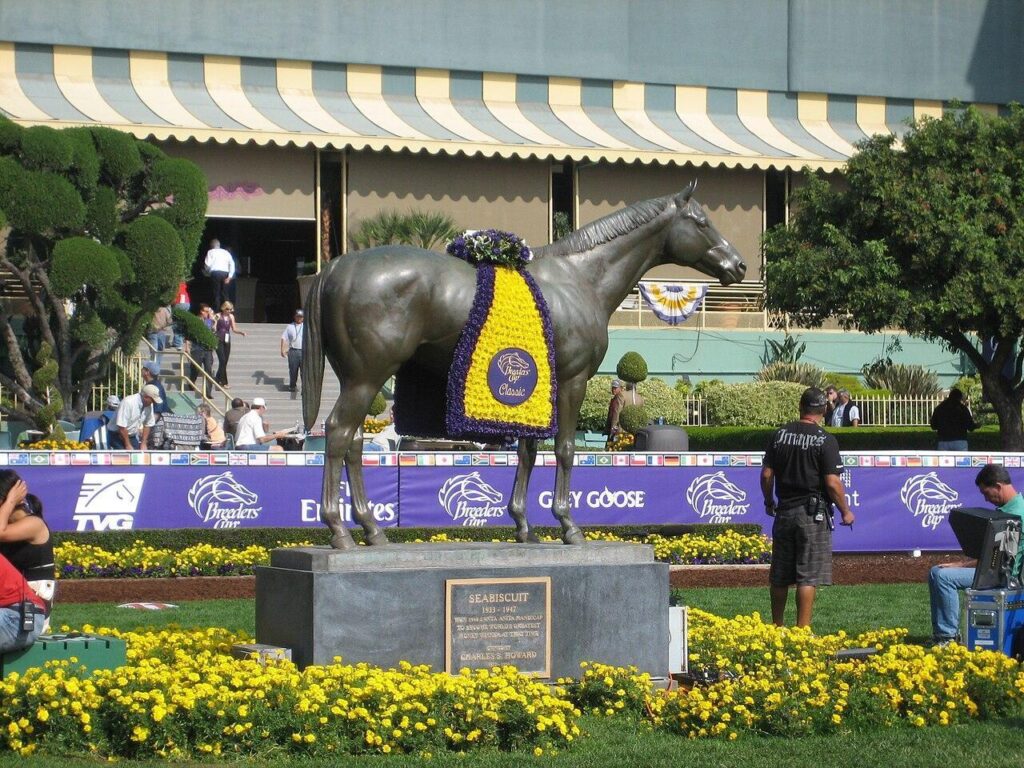
There are few more popular racing events on the global horse racing schedule in this modern day than the two-day season-ending Breeders’ Cup World Championships. The event ranks among the most popular for bettors, with the latest markets available here: https://www.twinspires.com/
The success enjoyed by the event stems from the red-hot competition that plays out on track, with superstars from across the globe competing in the major races worth millions of dollars.
However, the event has only grown in prominence throughout history, and it has come a long way since the days when many claimed that the idea wouldn’t work. But, how has the Breeders’ Cup become the undisputed ultimate championship on the equine calendar?
Early Formations of the Event
The idea for the Breeders’ Cup was formed in the 1980s, when John R. Gaines proposed a season-ending championship to determine the champions for the respective divisions in North America.
This idea was brought to the table by Gaines before the Kentucky Derby Festival in 1982, with high-level competition being a key attraction. However, he was avidly involved in the sport as an owner and breeder, and determined that a season-ending event such as the Breeders’ Cup would help clean up the sport’s image.
As is traditionally the case with a new idea, it was greeted with sceptics in some parts, as they felt there was no need to alter the status quo. However, a big early supporter of the Breeders’ Cup would come in the form of legendary trainer John Nerud. His reputation ensured that the Breeders’ Cup got the immediate support that it required to get off the ground.
Early Races
It was determined in the early years that prize funds for races would be determined by nomination fees paid by breeders for stallions and the resultant foals. In North America, involved farms would pay an annual fee to ensure involvement, while European stallions would cost 50% of their stud cost.
South American runners could also be declared to run for 25% of their stud cost. All races continue to be operated by Breeders’ Cup Limited, which was a company founded in 1982, just months after the original idea for the event was put forward by Gaines.
However, the inaugural running of the Breeders’ Cup wasn’t staged until two years later. Between its founding year and 2006, the event would run as a one-day meeting, before a second day was introduced in 2007.
Expansion to Two Days of Racing
The most radical changes to the Breeders’ Cup came in 2006 when CEO of the event Greg Avioli announced that an ‘exciting time’ for the event was approaching.
During this time, the focus switched to attracting an international market for the championships, promoting the two-day meeting for broader television and sponsorships. In the first two-day Breeders’ Cup, fillies and mares would be involved in all of the races on the opening day before males were in action on the second day. During this time, the prize money also increased significantly, with over $25 million being up for grabs.
One of the most interesting developments during this time came in the form of ‘Win and You’re Win’ races, which would secure automatic access to championship races. As well as American qualifying races, there would also be opportunities to secure a place in the starting gates in nations such as England, Ireland, France, and Australia.
Changes to Race Schedule
The Breeders’ Cup has constantly evolved throughout history, with different races trailed and ultimately axed. The Marathon was added in 2007, before being dropped in 2014. Meanwhile, the Juvenile Sprint was introduced in 2011 before being scrapped after two years.
For many editions of the Breeders’ Cup between 2008 and 2014, Churchill Downs or Santa Anita were selected to host. However, the door was opened to other tracks when Keeneland hosted the 2015 edition.
This would prove to be one of the most historic editions of the event, as American Pharoah completed the Grand Slam of Thoroughbred Racing after decisively winning the Classic.
A logical change to the program was made in 2018, as it was determined that the opening day would become Future Stars Friday, consisting of five graded races for juveniles. The second day would then be called Championship Saturday, with all major Grade Ones for older horses being run on the second day.
Legendary Figures at the Breeders’ Cup
As home to some of the most respected stars in racing, the Breeders’ Cup has been dominated by some of the biggest names. Mike Smith holds the record for most wins in the saddle, clocking up 27 victories.
Meanwhile, Aidan O’Brien and Bob Baffert are tied for the most victories as a trainer. Sierra Leone holds the record for the most prize money won at the Breeders’ Cup, but that record could be under threat by Japanese superstar Forever Young in 2026.
The same horse could also become only the second equine to win the Classic in successive years after Tiznow previous achieved the feat in 2000 and 2001.


